| www.melbourneenamelling.com.au | Home Enamelling Products Contact |

At Melbourne Enamelling we pride ourselves in our ability to work closely with all Customers and Contractors.
We focus on listening to understand what is required. With our experience and resources, we work hard towards producing the best quality Enamell Signage on time and on budget.
We have over 40 years with the application of Viterous enamel. Contact us now.
Melbourne Enameling has developed a technique to apply Vitreous Enamel to
Stainless Steel which has not been matched by other Enamel provider.
The back plates
of all signs and house Names and Numbers are made from precision laser cut Stainless
Steel for life long corrosion protection.
Vitreous Enamel (also known as Porcelain Enamel) is a glass coating that is fused to metal at temperatures around 850 degrees celsius.
Whats in a name:
In Australia and England it is refered to as Vitreous Enamel but in US
it is called Porcelain Enamel.
The Process dates back to the ancient Egyptians, Greeks, Celts, Georgians, and Chinese who
used enamel on metal artifacts.
Some of the extensive uses of Vitreous Enamel include:
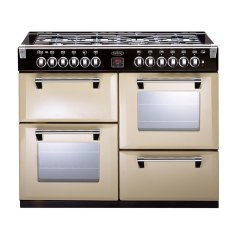
- Cooking Appliances (ovens, cook tops, BBQs)
- Cookware
- Signage
- Architectural panels
- Heaters & Fireplaces
- Hot Water Services
- Baths
- Basins
- Car Exhaust Manifolds
Benefits of using Vitreous Enamel
- Rust resistant
- Scratch resistant
- No pores or scratches to allow bacteria to grow
- Wipes clean (graffiti can be easily removed)
- Will not scorch, burn or discolour in high temperatures
- Available in an infinite variety of colours

In history, enamel was initially applied on gold, silver, copper and bronze, and then on iron and steel. The earliest known enamelled objects were made in Cyprus around the 13th Century BC. Gold rings decorated with vitreous coloured layers fused on to the gold were discovered in a Mycenaean tomb. Earlier decoration of metal objects with glass found in ancient Egyptian tombs relied on cementing the glass to the metal. Cloisonne` techniques pre-date enamel to 4000 BC. Cloisonne` was a method of setting semi precious stones into jewellery by cold cementing. It was widely used by the Egyptians, as displayed in the famous gold mask of Tutankhamen. The first enamelling on iron is believed to have taken place in the 18th Century in Germany.

Copyright © Melbourne Enamelling Pty Ltd 2012-